
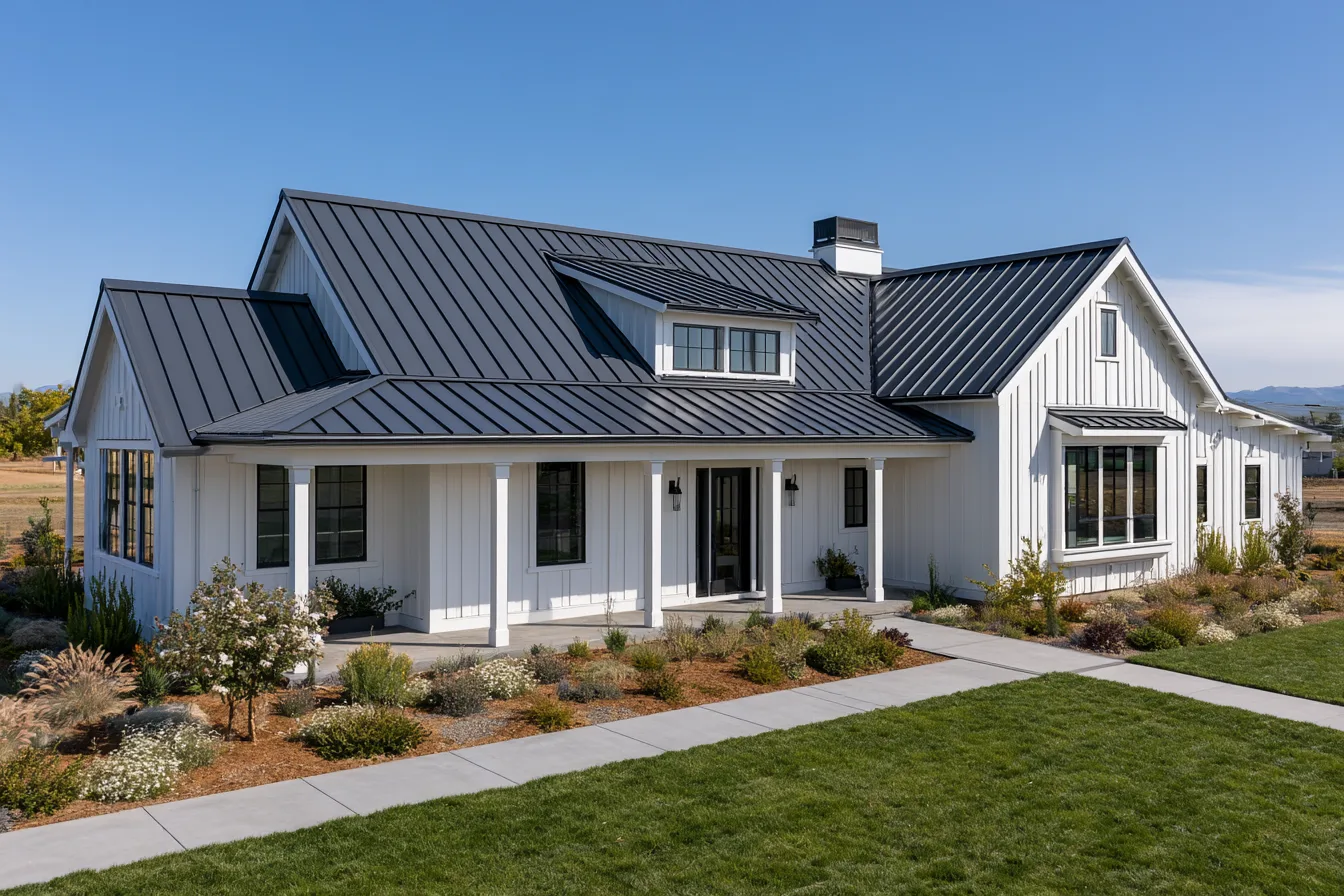
Metal Roofing in Greenville, TX
Metal roofing is a system choice, from the panel seams to the roof edges. Explore the options and the repair details that matter for your Greenville property.
Metal roofing choices in Greenville
A metal roof can look simple from the road: long panels, a ridge and clean edges. The work is in the connections. The attachment must suit the panel, the assembly must allow movement and the flashings must carry water past every opening.
Standing-seam and exposed-fastener roofs solve those details differently. The suitable choice depends on the building, roof slope, panel runs, appearance and budget. A home with intersecting slopes has a different layout from a simple detached building with long straight runs.
For a Greenville property, start with the roof you have and the system you are considering. A free roof inspection can help establish whether the project is a focused repair, a panel-system change or a complete replacement.
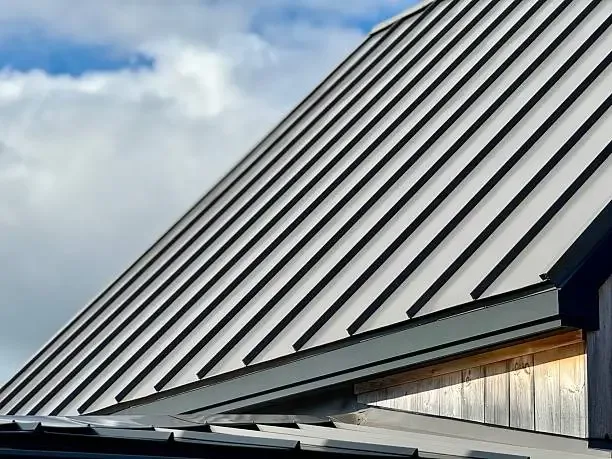
Standing seam and exposed fasteners
These are broad system differences. The selected product's instructions and the actual roof determine the finished assembly.
Metal roof details that shape the work
Panels are one part of the roof. The support and transitions determine whether they form a complete water-shedding assembly.
- Slope, deck and underlayment
Each panel system has slope and substrate requirements. The deck or support needs to suit the chosen attachment, and the underlayment needs to suit the assembly. A product intended for one slope or support arrangement is not interchangeable with every metal panel.
- Edges, valleys and openings
Eaves, rakes and ridges need the appropriate trim, closures and water paths. Chimneys, pipes and wall intersections need compatible flashing that accommodates the panel layout. Penetrations cannot be treated as isolated sealant spots without considering panel movement and drainage.
- Material compatibility
Dissimilar metals, incompatible sealants and runoff from adjacent materials can affect durability. A repair needs to match the panel coating, fastening and flashing system, rather than introduce a different material because it fits the visible gap.
Repairing metal or replacing the system
A loose fastener or local flashing defect does not automatically require new panels across the roof. The surrounding metal and attachment determine what repair can accomplish.
- A repairable local detail
A suitable fastener repair, compatible flashing repair or localized panel work can address a defined defect when the surrounding metal and support remain sound. The correct repair depends on the panel system and the cause of the opening.
- Wider panel or attachment problems
Corrosion through the material, enlarged fastener holes, damaged seams or mismatched previous additions can make repeated surface sealing ineffective. Wider replacement can be needed to restore a consistent attachment and drainage system.
- What affects the installed cost
Panel type, roof geometry, trim, fabrication, removal and underlying support all affect scope. The roof replacement page explains the connected work when changing the entire roof.
Metal roofing FAQs
Can metal roofing go over shingles?
That depends on the existing assembly, deck, moisture condition, weight, product instructions and applicable requirements. Leaving the old roof in place also leaves parts of the assembly concealed. A recover needs to be assessed as a complete assembly, not assumed from the panel material.
Will rain be louder inside?
Interior sound depends on the complete roof and ceiling assembly, including deck, insulation and the space below the panels. A panel sample or an open-sided building does not tell you how rain will sound inside a finished home.
Is every metal roof suitable for a low slope?
No. Panel systems have specific slope and seam requirements. A profile intended to shed water on a steeper roof is not automatically suitable for a low-slope building. The chosen system and its details must fit the actual roof.
Does a metal roof warranty cover every leak or storm?
Finish, product and installation coverage can address different issues. The issuer, system, conditions and exclusions determine the coverage that applies to the project. Those terms need to be considered with the chosen metal roofing system.
Let’s talk about your roof.
Tell us where the property is and what you have noticed. A free roof inspection is a useful place to start.