
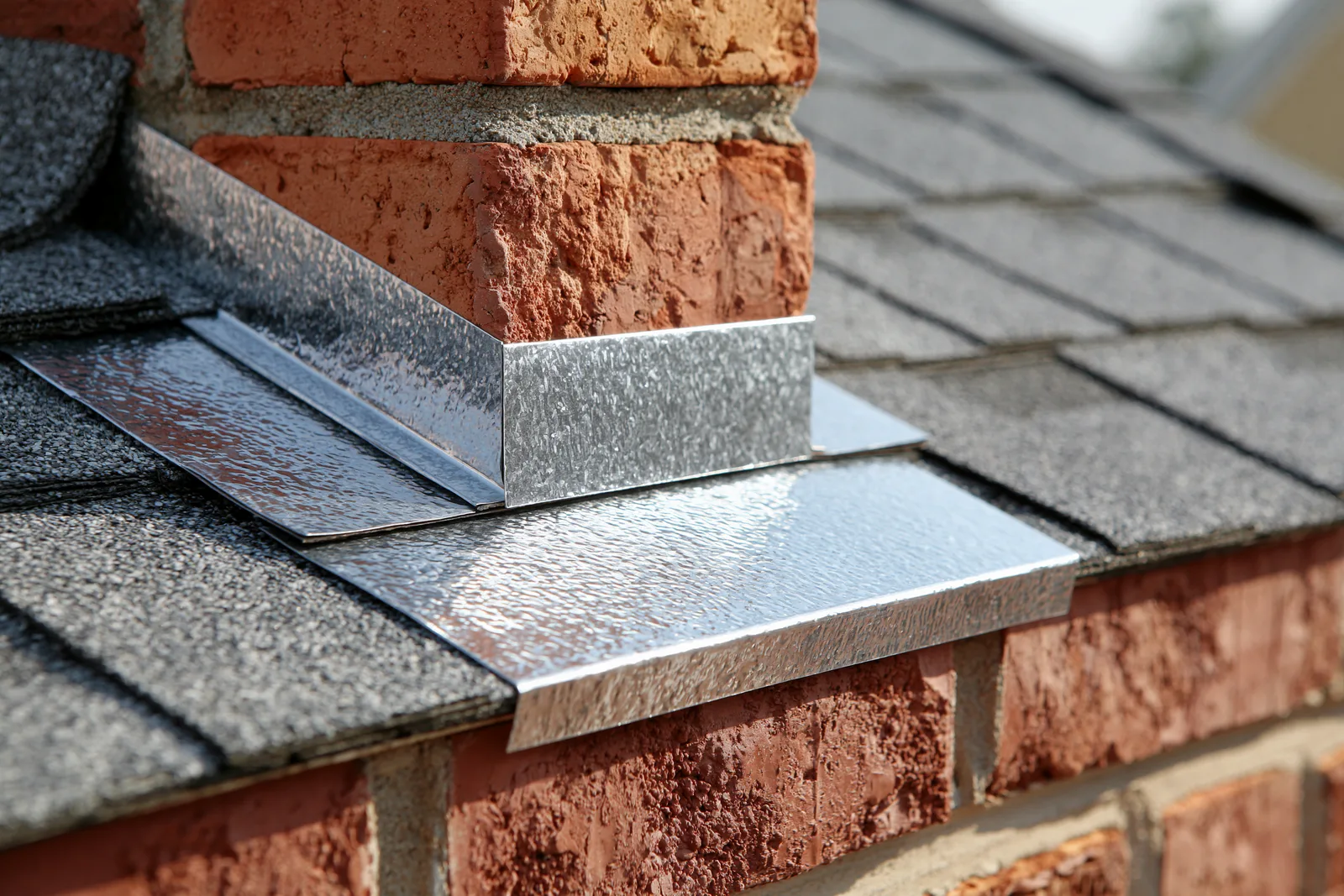
Roof Flashing Repair in Greenville, TX
Where a roof meets a wall, chimney or opening, the connection has to carry water past the joint. Understand when that detail needs resealing and when it needs rebuilding.
Roof flashing repair in Greenville
Water beside a chimney or wall often draws attention to the exposed sealant. Beneath it, shaped metal and overlapping roof layers are supposed to move rain past the joint. If that concealed connection has failed, adding more sealant at the edge leaves the underlying problem in place.
Flashing repair examines how water approaches the joint and where it goes next. The appropriate work can be a limited repair to an otherwise sound detail, or removal of adjoining roofing to rebuild the connection. The condition of the shingles, wall covering and deck shapes how far the work extends.
A free roof walk is a practical starting point for a Greenville home with a leak near one of these intersections. Tell us where the water appears and what you have noticed. The indoor location is useful context, not proof of the entry point.
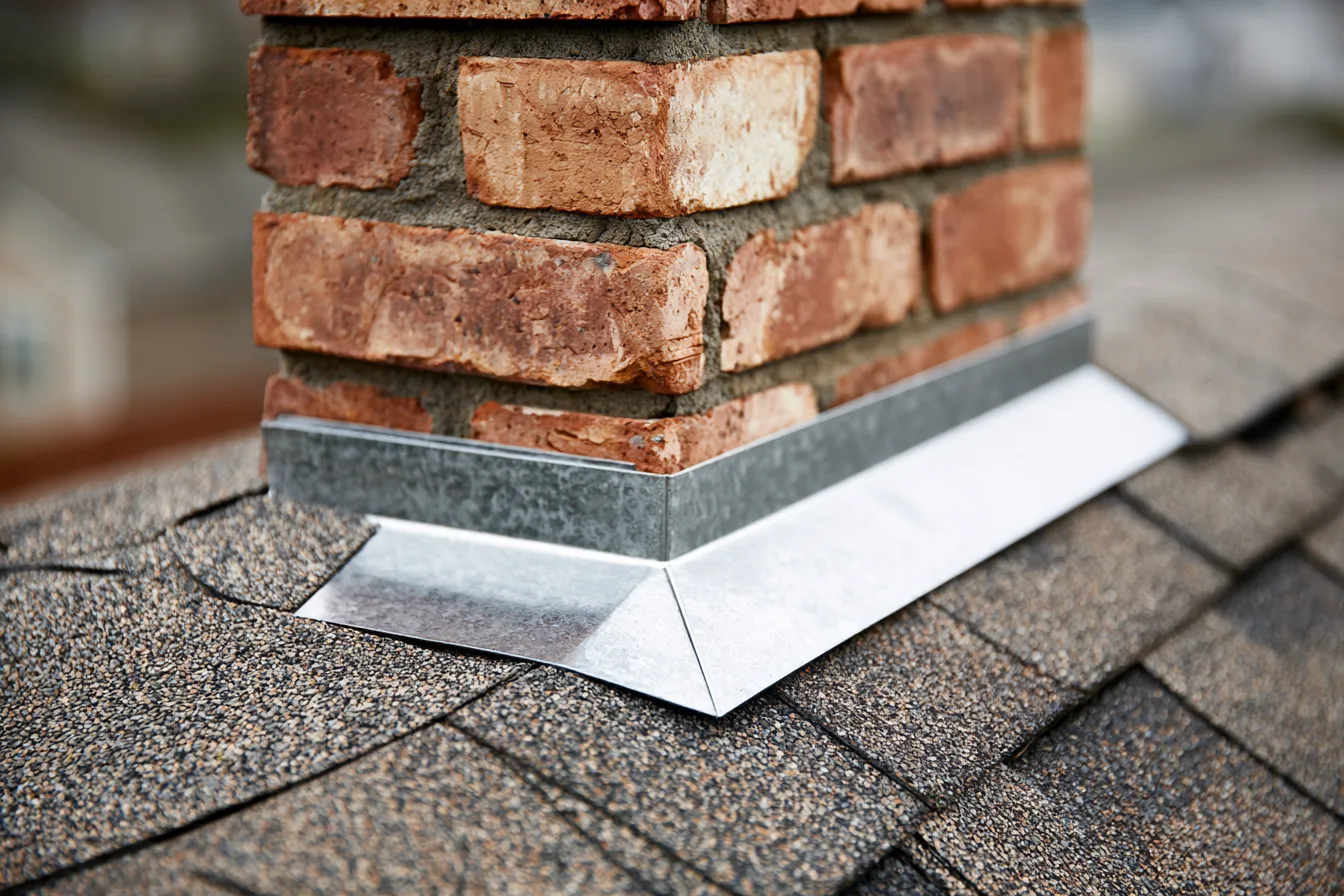
Repairing the roof connections that leak
These details have different water-shedding jobs. Treating them as one exposed bead of caulk misses the layers that make them work.
- Walls and kick-out details
Step flashing works with successive shingle courses along a sloped wall. At the bottom, a kick-out directs water away from the wall and toward the intended drainage path. Missing or incorrectly connected pieces can send runoff behind siding instead.
- Chimneys and counterflashing
Base flashing works with the roof covering; counterflashing protects the upper edge of that connection at the chimney. The masonry, crown or cap can also admit water, so a roof repair does not automatically solve every chimney leak. Masonry repair is a separate trade when the water path requires it.
- Valleys and roof openings
Valleys carry runoff from intersecting slopes, while boots and shaped flashing protect vent openings. Repairs need compatible material, proper laps and fastening that does not interrupt the drainage route. Failed underlying material can widen the work beyond the metal itself.
Resealing a joint or rebuilding the flashing
Sealant has a role within the correct detail. It does not replace the detail.
When the opening is not yet clear, roof leak tracing helps connect the indoor symptom to the roof or another source.
Roof flashing repair FAQs
Does a chimney leak mean the flashing is bad?
Not always. Water can enter through flashing, masonry, the chimney cap or another connected detail. The repair follows the water path. Rebuilding roof flashing will not fix deterioration higher in the chimney if that is where rain enters.
Should flashing be considered during roof replacement?
Yes. Its condition, fit and connection to the new roof system belong in the replacement scope. Covering an old failed detail with new shingles leaves the same leak path beneath the new roof.
Can surface sealant stop the leak?
It can address a suitable limited joint defect when the rest of the assembly is sound and the repair material is compatible. Missing overlaps, corroded metal or damaged concealed layers need the appropriate rebuild; sealing the visible edge alone does not restore them.
Why is the stain away from the chimney or wall?
Water can travel along roof layers or framing before it drips inside. The stain marks where water reached the room. The inspection needs to connect that symptom to the opening rather than assume the closest exterior feature caused it.
Let’s talk about your roof.
Tell us where the property is and what you have noticed. A free roof inspection is a useful place to start.